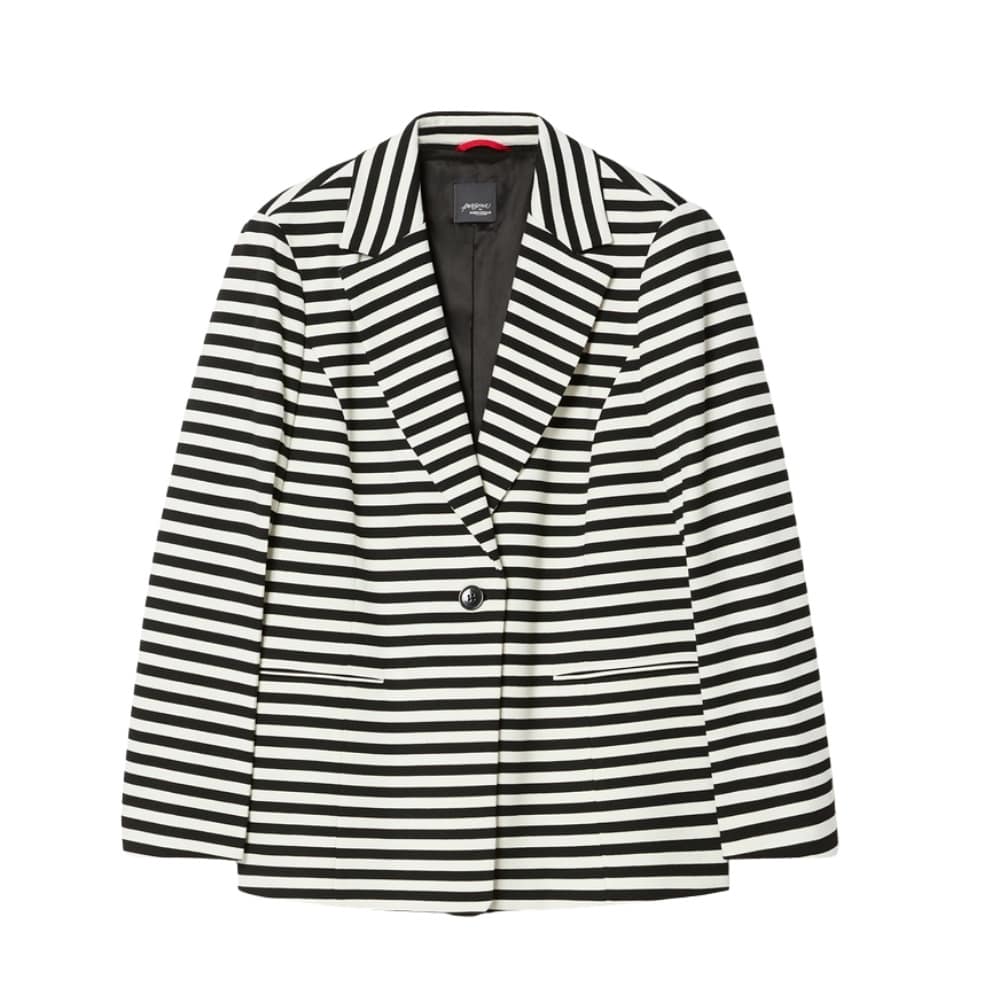
Cut. Structure. Proportion.
Few garments demonstrate the importance of construction as clearly as a blazer.
When the cut is right, a blazer becomes transformative – defining the waist, balancing the shoulders and bringing structure to the entire silhouette.
When the cut is wrong, it overwhelms the body.
Below are examples of blazers that demonstrate what happens when tailoring is cut for curves.
Blazers That Work For Curves
Classic Tailoring
This is your benchmark.
A classic tailored blazer should demonstrate:
• Clean notch lapels
• Defined waist shaping
• Balanced shoulder structure
• Mid-hip length
• A clear vertical line through the closure
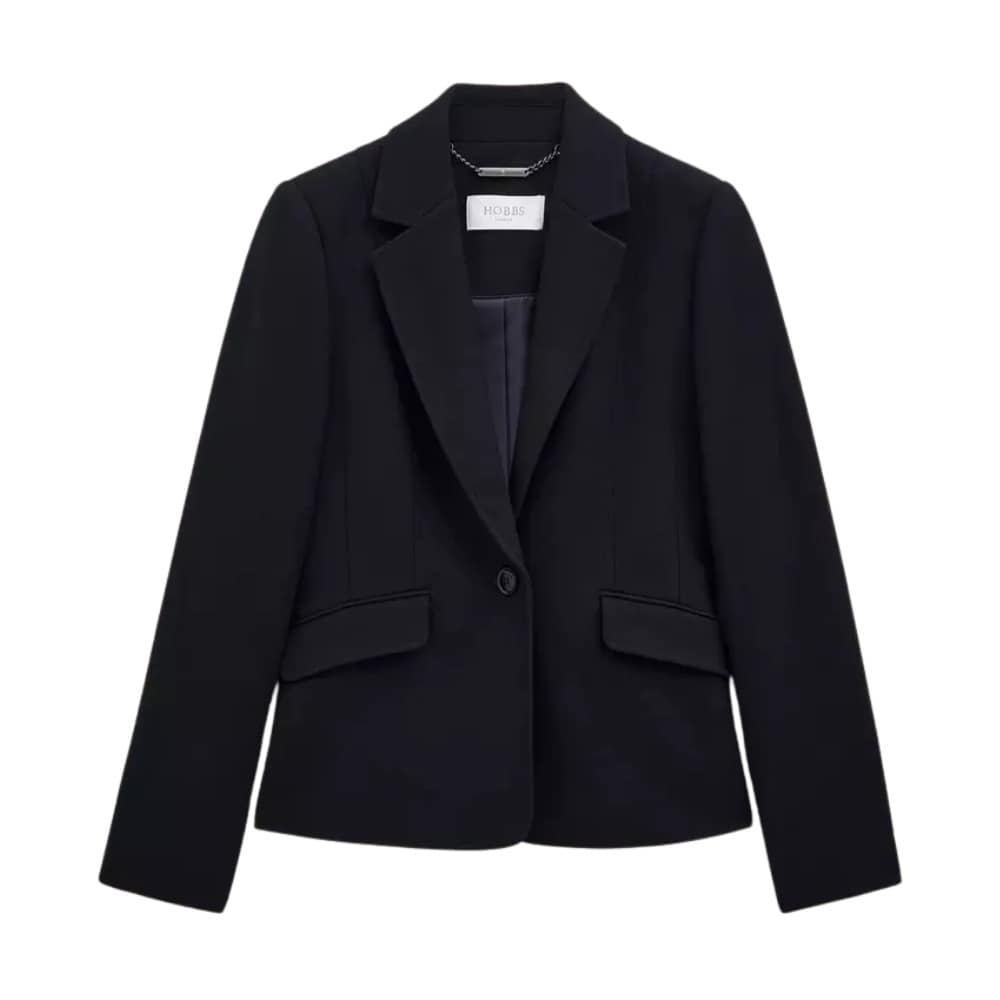
This Hobbs example opposite shows textbook proportion. The one-button closure creates a long, elegant V through the torso, while subtle seam contouring defines the waist without feeling restrictive.
This is tailoring at its most refined — the reference point for everything else.
Single Breasted
Single-breasted blazers offer everyday authority.
Look for:
• One or two-button closure
• Visible waist shaping
• Controlled shoulders
• A length that finishes at the hip
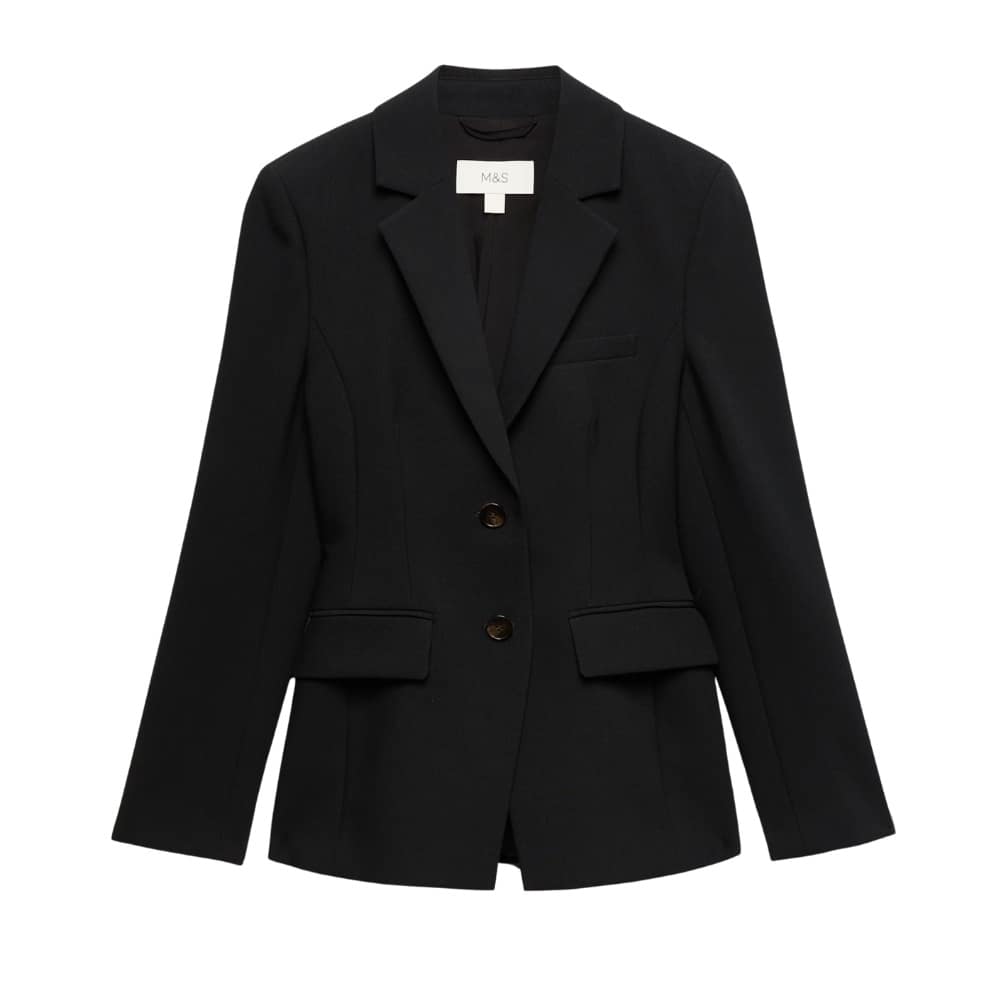
This M&S example demonstrates how accessible tailoring can still achieve strong proportion. The two-button closure sits slightly higher, offering classic structure while maintaining shape through the waist.
Single-breasted works beautifully when the vertical line remains clean and uninterrupted.
Double Breasted
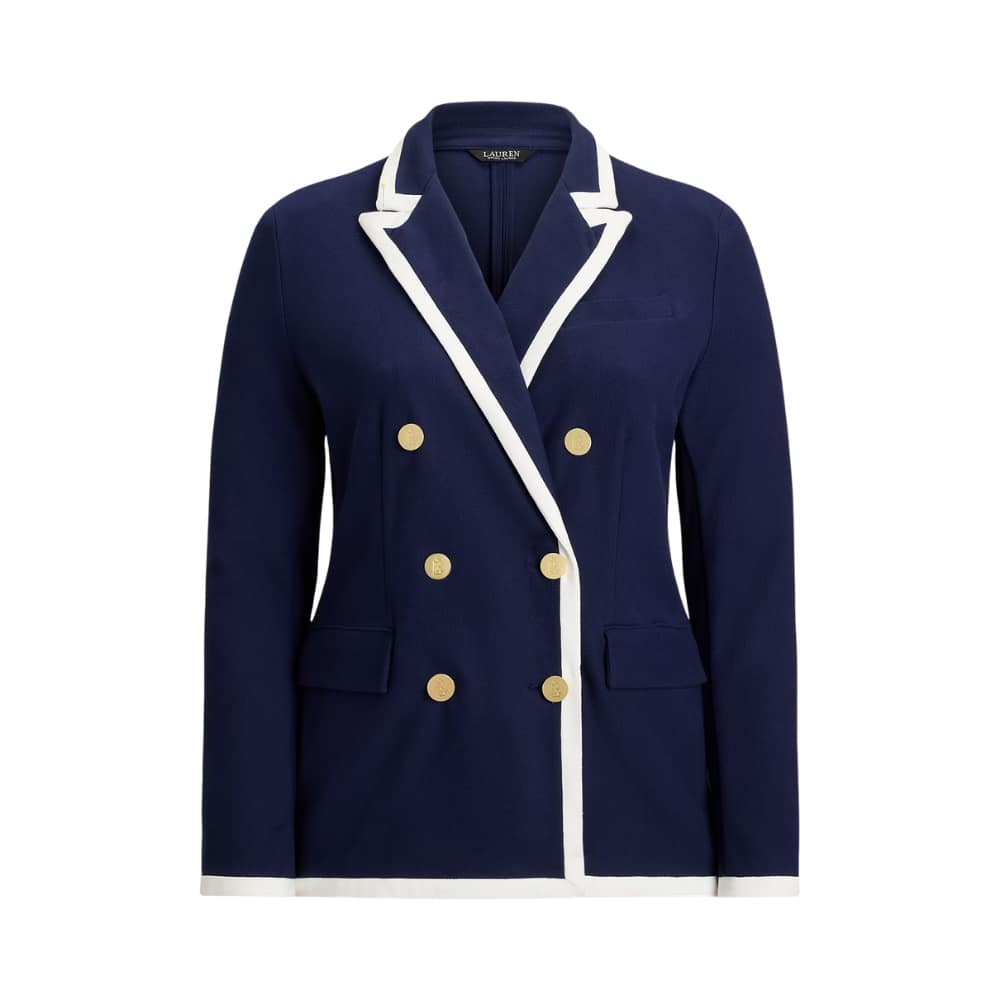
Double-breasted can work exceptionally well on curves, when cut correctly.
Longline
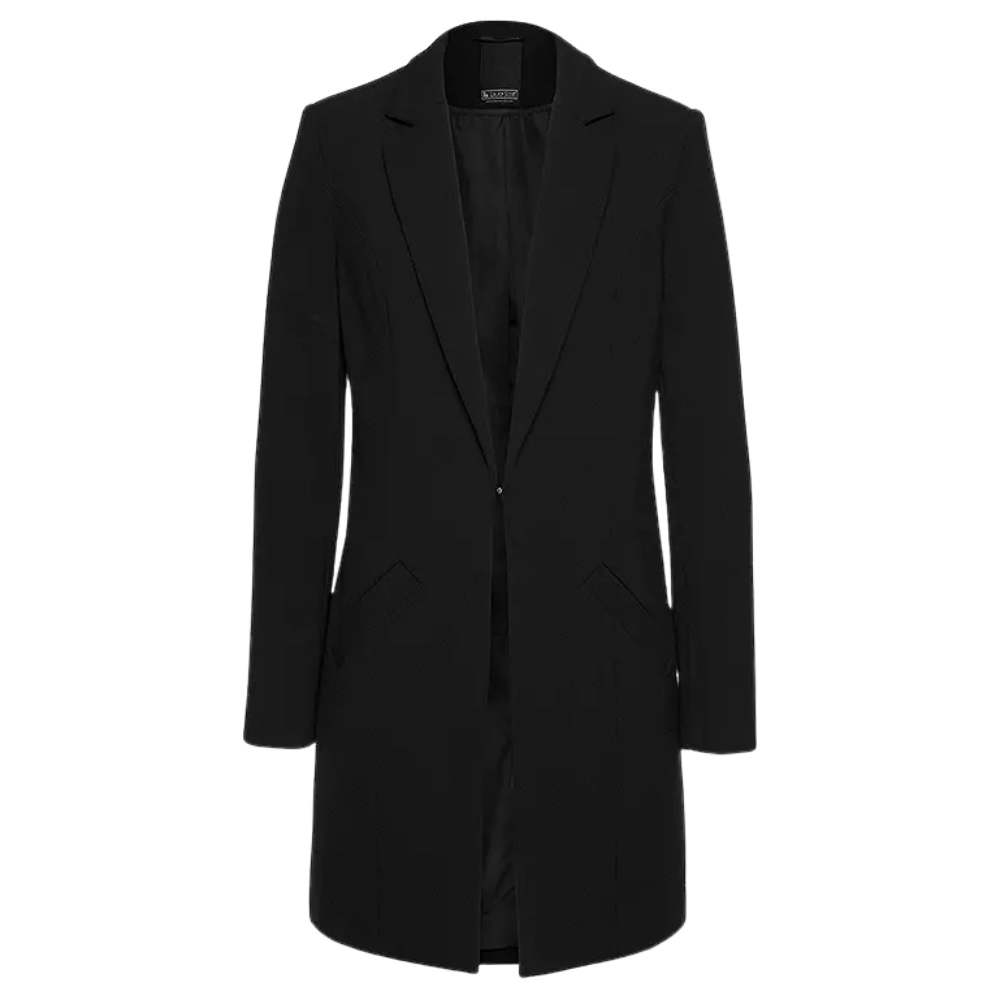
A true longline blazer should elongate the silhouette whilst maintaining structure.
Look for:
• Mid-thigh length (not knee-length)
• Visible waist shaping
• Clean lapel line
• Controlled shoulders
At present, genuinely well-cut longline blazers in extended sizes are limited. Many current options lean oversized or coat-like, losing waist definition.
The example shown demonstrates the shape and proportion we are seeking — length with tailoring, not just length alone.
This section will be updated as stronger extended-size options become available.
Relaxed
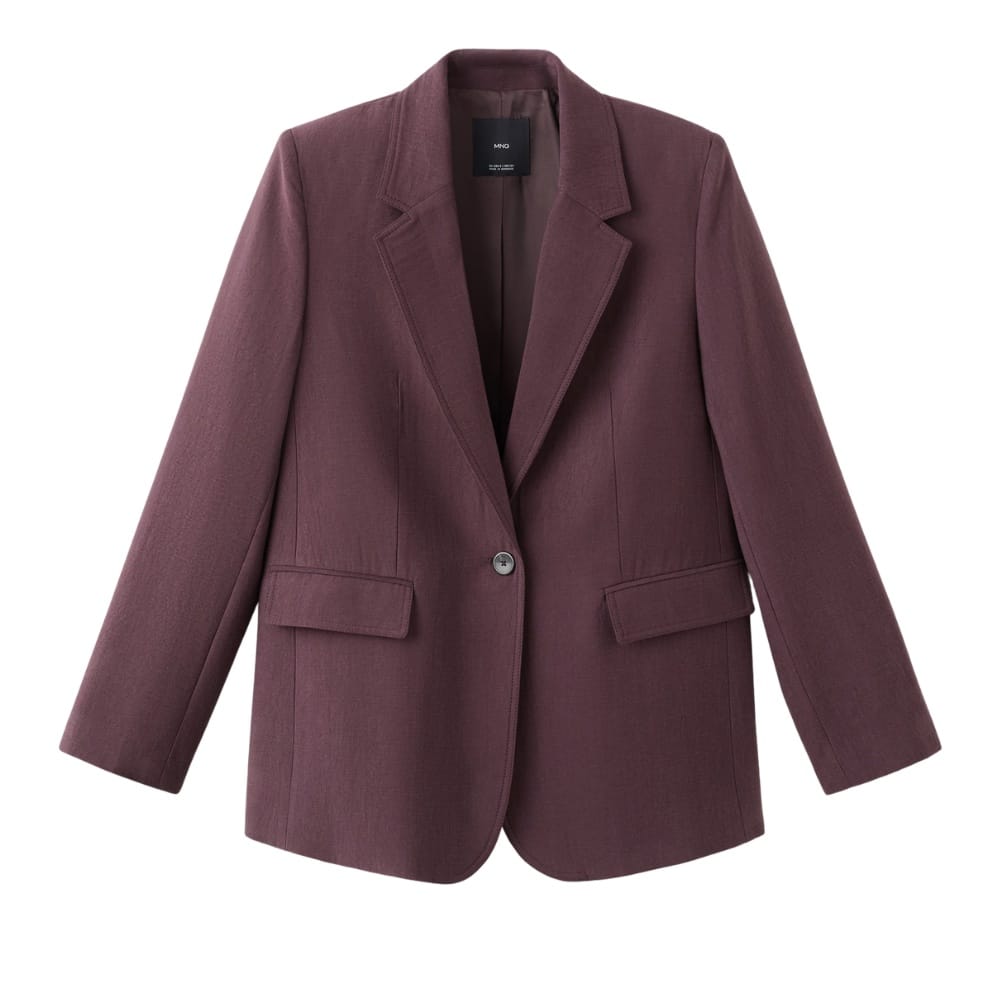
Relaxed does not mean shapeless.
A relaxed blazer should still hold its structure through the shoulder and maintain subtle contouring through the waist.
The Mango example shows:
• Soft tailoring with presence
• Clean lapel proportion
• Gentle shaping through the torso
• A modern, fluid drape
Relaxed tailoring works beautifully when ease is intentional rather than accidental.
The Curveball
Not every blazer needs to be neutral or traditional.
The striped relaxed-fit example demonstrates how line placement can shift perception.
The angled lapel and single-button closure interrupt the horizontal stripe, creating vertical balance and structure.
When proportion and construction are considered carefully, even directional pieces can work beautifully on curves.